
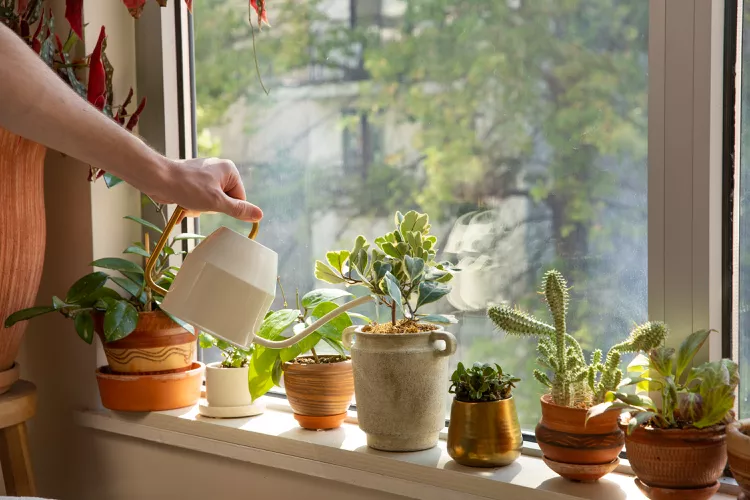
Houseplants can make a room feel calmer and fresher, but moisture needs can vary widely between species. Good interior plant humidity ideas focus on creating small, manageable moisture zones rather than turning the entire home into a humid greenhouse.
The goal is balance: enough moisture for tropical foliage without encouraging condensation, mold growth, or discomfort.
Group Plants to Create Small Humidity Zones
Plants naturally release some moisture through transpiration. Grouping several moisture-loving plants together can create a slightly more humid pocket around their leaves without significantly changing conditions across an entire room.
A cluster beside a bright window can also look more intentional than scattered individual pots. Interior inspiration from room styling resources can help when arranging different plant heights without making the space feel crowded.
Keep Air Moving Around Dense Foliage
Grouping plants too tightly may restrict airflow between leaves and pots. Leave a little breathing room, especially around broad-leaf varieties.
A small fan operating elsewhere in the room may help maintain gentle circulation. Direct, constant airflow against delicate plants can dry foliage too quickly, so indirect movement is usually preferable.
Use Humidifiers Where Plants Actually Need Them
A room humidifier can be useful for tropical plants during dry heating seasons. Placement matters more than simply choosing the highest output setting.
Keep the unit close enough to influence the plant zone but far enough away that leaves and furniture aren’t continually wet. Broader interior layout inspiration can be useful when deciding how a humidifier, plant stand, seating, and electrical outlets fit together.
| Approach | Useful For | Main Limitation |
|---|---|---|
| Plant grouping | Small plant collections | Limited humidity increase |
| Room humidifier | Dry indoor air | Requires cleaning |
| Pebble tray | Individual pots | Modest local effect |
| Bathroom placement | Humidity-loving plants | Light may be limited |
Try Pebble Trays Without Expecting Dramatic Results
A tray filled with pebbles and water can add a little moisture immediately around a plant. The pot should sit above the waterline rather than standing directly in water.
Pebble trays are better viewed as a small supporting measure than a complete humidity solution. They work particularly well as decorative elements when coordinated with planters, stands, and relaxed living-room styling.
Match Plants to Naturally Humid Rooms
Bathrooms, kitchens, and laundry areas can provide more moisture than bedrooms or heated living spaces. A suitable plant placed near good natural light may benefit from these conditions without any additional equipment.
Avoid selecting a location based on humidity alone. Many bathrooms have limited daylight, while kitchens can expose leaves to grease, heat, or sudden temperature changes.
Where Indoor Humidity Plans Can Go Wrong
More humidity isn’t automatically better. Constantly wet windows, damp walls, musty smells, or moisture collecting behind furniture suggest the room may already have too much moisture.
Another mistake is misting leaves repeatedly while ignoring overall room conditions. Misting creates brief surface moisture but usually doesn’t produce the steady atmospheric humidity tropical plants prefer. Wet foliage can also remain damp longer in rooms with poor airflow.
Frequently Asked Questions
Do houseplants significantly increase indoor humidity?
A large plant collection may add some moisture through transpiration, but the effect depends on room size, ventilation, plant quantity, and environmental conditions. A few plants generally won’t replace a humidifier in an unusually dry room.
Should I mist tropical houseplants every day?
Daily misting isn’t necessary for many indoor plants. It produces temporary leaf moisture rather than stable humidity. Consistent watering, appropriate room conditions, and good airflow are usually more useful than frequent spraying.
What indoor humidity level is comfortable for plants and people?
Many common houseplants tolerate ordinary household conditions, while tropical species may prefer somewhat more moisture. Rather than chasing one exact number, watch both plant condition and signs of excess indoor dampness.
Build Moisture Around the Plant, Not the Whole House
Start by placing plants where their natural preferences already fit the room. Group compatible species, use a humidifier only where needed, and keep enough airflow to prevent persistent dampness.
The best interior plant humidity ideas don’t make a home feel tropical everywhere. They create controlled pockets of moisture that support greenery while keeping walls, windows, furnishings, and people comfortable.


