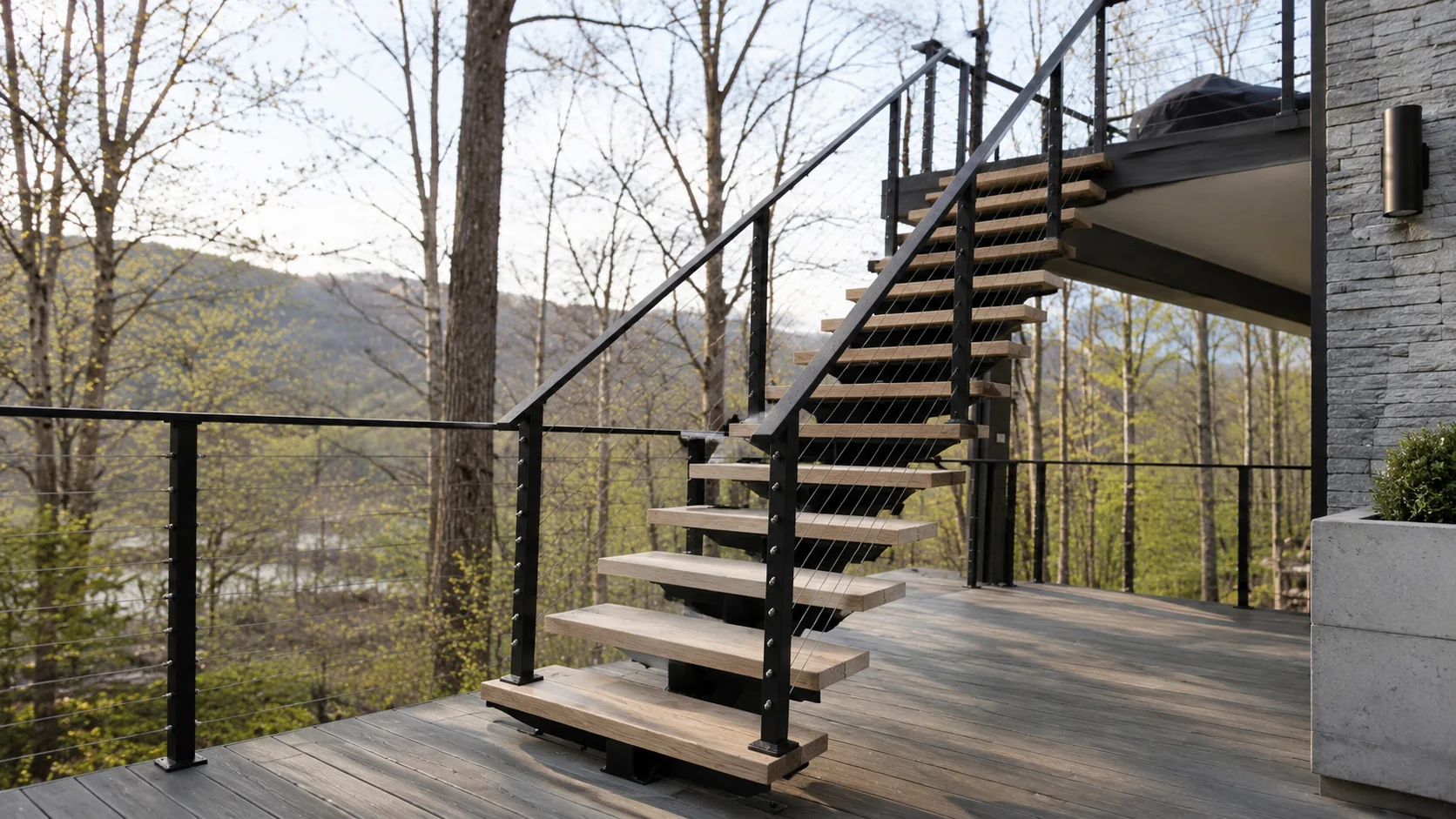
Outdoor handrails can make steps noticeably safer without turning an entrance into a bulky, institutional-looking space. The strongest designs combine a comfortable gripping surface with slim posts, restrained colors, and mounting details that blend into the surrounding architecture.
Good outdoor handrail ideas also consider weather exposure, step width, lighting, and how people naturally approach the stairs. A rail should feel secure in use while remaining visually quiet from the street.
Start With a Slim Material Profile
Heavy rails aren’t automatically safer. A well-installed metal handrail with narrow posts can provide dependable support while occupying far less visual space than oversized timber construction.
Powder-coated steel and aluminum are common choices because they can be formed into thin profiles. Black, charcoal, bronze, or colors close to nearby trim tend to recede visually, especially when the railing follows the same lines as the steps.
Rounded or gently shaped gripping surfaces are also worth considering. Decorative square tubing may look clean, but the part held by the hand should remain comfortable and easy to grasp.
Match the Rail to the Outdoor Setting
A handrail looks lighter when it feels connected to the rest of the property. For steps near patios, pools, or landscaped gathering areas, browsing broader outdoor living inspiration can help homeowners notice how rails interact with paving, planting, fences, and other exterior features.
Rather than treating the rail as a separate object, repeat an existing material or finish. A dark metal rail beside dark window frames, for example, usually attracts less attention than an unrelated finish.
Avoid excessive decorative scrollwork if the goal is visual simplicity. Small details become surprisingly noticeable when repeated along a staircase.
Use Placement to Reduce Visual Clutter
The rail should follow the natural movement of the steps instead of creating extra lines. Mounting posts close to stair edges can preserve walking width while keeping the railing visually tied to the staircase.
Homeowners collecting comfortable home design ideas may also want to consider how the handrail feels during everyday use, particularly where children, older visitors, or anyone carrying groceries regularly uses the entrance.
| Design Choice | Visual Effect | Practical Benefit |
|---|---|---|
| Slim metal posts | Light appearance | Strong support |
| Dark matte finish | Recedes visually | Hides minor marks |
| Simple straight rail | Cleaner lines | Easy gripping |
| Edge-mounted posts | Less clutter | Preserves step width |
Lighting can further improve safety without making the rail itself more prominent. Low step lights or nearby wall fixtures help users judge changes in elevation after dark.
Coordinate the Rail With the Property Edge
Front steps often sit within a larger composition that includes retaining walls, planting beds, paths, and driveway edges. Looking at property improvement concepts can help frame the handrail as one small part of the overall frontage rather than the dominant feature.
Where possible, align posts with existing joints in paving or masonry. Small alignment decisions make installations appear intentional and reduce the impression that hardware was added afterward.
For concrete steps, side mounting may create a cleaner top surface. On timber stairs, attachment points should be planned around structural framing rather than appearance alone.
What Can Make a Handrail Feel Too Heavy?
The most common mistake is adding more material than the staircase needs. Thick posts, multiple horizontal bars, oversized caps, and ornate panels can compete with a small entrance.
Another issue is contrast. A bright railing against a muted house will naturally become a focal point. If subtlety matters, choosing a finish already present on doors, lighting, fencing, or window frames usually creates a calmer result.
Safety should never be reduced merely to achieve a minimalist appearance. A slim rail still needs firm anchoring, sensible placement, and a shape that can be held securely.
Frequently Asked Questions
What material works well for a minimalist outdoor handrail?
Powder-coated steel and aluminum are popular because relatively slim components can create a clean appearance. The better choice depends on weather exposure, maintenance expectations, structural requirements, and the design of the existing steps.
Should an outdoor handrail match the house color?
It doesn’t have to match exactly. Repeating the color of window frames, exterior lights, fencing, or door hardware can make the handrail feel connected to the property while keeping contrast under control.
Can lighting replace a handrail on outdoor steps?
Lighting and handrails solve different problems. Good lighting makes stair edges easier to see, while a handrail gives users physical support. Steps that require a rail should not rely on lighting as a substitute.
Make Safety Part of the Architecture
The best handrail doesn’t need to demand attention. Choose a comfortable grip, keep the profile simple, coordinate the finish with nearby exterior details, and make every attachment secure. When the rail follows the staircase instead of competing with it, safety becomes part of the design rather than an obvious addition.