
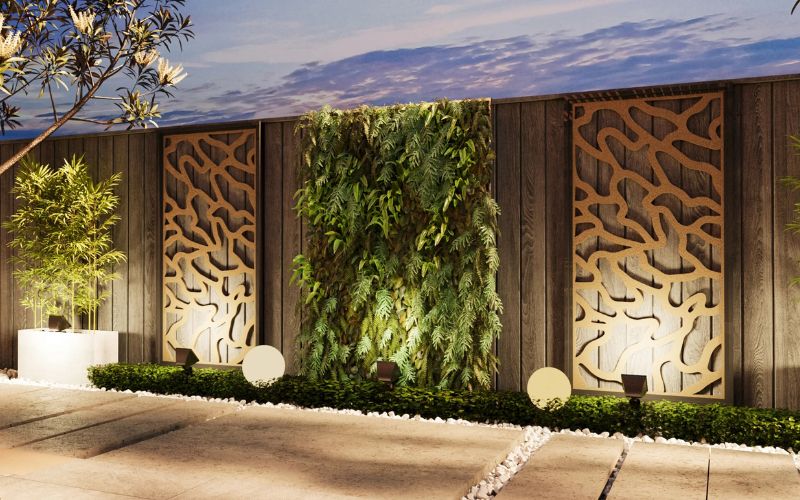
Privacy inside a home doesn’t always require a solid wall. Interior screens can separate work areas, sleeping zones, entryways, or dining spaces while allowing daylight to continue moving through the room. The strongest interior screen ideas balance visual separation with openness, making a space feel more organized without turning it into a collection of small boxes.
Why Interior Screens Work in Open Rooms
A screen creates a psychological boundary before it creates a physical one. You can still sense the room beyond it, but furniture, movement, and daily clutter become less exposed.
This approach works especially well in apartments and open-plan homes where permanent walls may reduce flexibility. A screen can define a home office near a living room, shield a bed in a studio, or soften the direct view from an entry door.
Choose Materials That Let Light Pass Through
Slatted wood is one of the most practical choices because spacing between the slats controls how much privacy you gain. Narrow gaps create stronger screening, while wider spacing keeps the structure visually light.
Decorative metal, woven cane, fluted glass, and perforated panels create different effects. A screen near a fireplace or lounge zone can also become part of the room’s architectural composition, especially when its finish coordinates with ideas found in broader fireplace design inspiration rather than appearing as an unrelated divider.
Position the Screen Around Sightlines
Placement matters more than sheer size. A screen rarely needs to run from wall to wall if its main job is blocking one direct line of sight.
For example, a narrow divider beside a front door can prevent visitors from seeing directly into a living area while leaving the rest of the floor plan untouched. Looking at broader interior planning concepts can also help when deciding how dividers relate to circulation, furniture groupings, and natural focal points.
| Screen Type | Privacy Level | Light Effect |
|---|---|---|
| Open wood slats | Moderate | High light flow |
| Fluted glass | High | Diffused light |
| Perforated metal | Moderate | Filtered light |
| Woven cane | Moderate | Soft filtered light |
Make the Screen Feel Architecturally Intentional
A divider looks strongest when it shares something with the room around it: wood tone, trim color, geometric language, or proportion. Repeating a finish elsewhere keeps the screen from looking like an object that was added later.
Location matters too. Screens positioned near patios, glass doors, or transitions toward outdoor areas can borrow visual cues from exterior design details, creating a more connected relationship between indoor and outdoor architecture.
What People Often Get Wrong
The biggest mistake is assuming more coverage automatically creates better privacy. An oversized screen can darken a room, interfere with movement, and make an open layout feel cramped.
Another problem is choosing a decorative pattern with no relationship to the viewing angle. A screen may look opaque from straight ahead yet reveal nearly everything from the side. Test important sightlines before deciding how dense the pattern needs to be.
Frequently Asked Questions
Can an interior screen provide privacy in a studio apartment?
Yes. A well-positioned screen can reduce direct views toward a bed, dressing area, or workspace without requiring a permanent wall. Slats, translucent glass, and woven panels are useful when daylight must continue reaching both sides.
Are floor-to-ceiling screens better than shorter dividers?
Not automatically. Floor-to-ceiling screens create a stronger architectural boundary, while shorter dividers preserve more openness. The better choice depends on the sightline you need to block and how much visual separation the room requires.
What screen material keeps the most natural light?
Clear or lightly textured glass typically preserves the greatest sense of brightness. Open wood slats also work well because light passes through the gaps while direct views become partially interrupted.
Create Privacy Without Losing Openness
The best screen solves a specific visual problem instead of dividing space simply for decoration. Start by identifying exactly what needs privacy, then choose the smallest screen capable of controlling that sightline. When proportion, material, and placement work together, the room gains definition while daylight and openness remain intact.


